A customer on the water asked us a sharp question last week: “Is there any documentation that the LiftMaster 98032 is suitable for oceanside environments?” It is a fair thing to ask before spending money on an opener that will live three blocks from the Atlantic.
The honest answer is worth more than a sales pitch, so here it is, along with what actually determines whether an opener survives salt air in South Florida.
The short answer
No manufacturer publishes a “coastal” or “marine” rating for residential garage door openers, and that includes the LiftMaster 98032. There is no salt-spray certification, no corrosion rating, and no oceanside approval in the documentation, because no such rating exists for this category of product.
What the documentation does cover is safety and capacity. The 98032 is UL 325 certified and rated to lift doors from 400 to 1,100 lbs. The installation manual specifies indoor mounting and a maintenance routine, but it says nothing about humidity, salt, or coastal exposure.
So if a salesperson tells you a residential opener is “rated for coastal use,” ask to see the document. There isn’t one.
That does not mean every opener is equally suited to life near the ocean. It means the decision comes down to design, installation, and maintenance rather than a certificate.
What salt air actually does to an opener
Salt is hygroscopic: it pulls moisture out of the air and holds it against metal. That thin, permanently damp, salty film is what makes coastal corrosion so much faster than ordinary rust. Our guide on how salt air affects garage doors covers the door itself. The opener system has its own weak points:
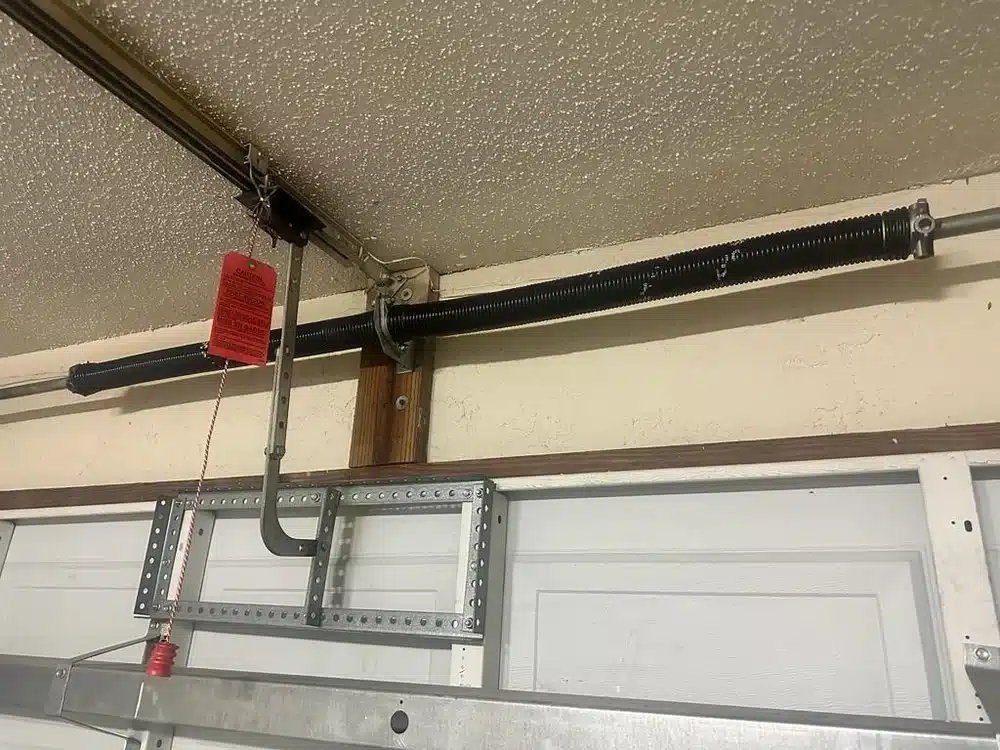
- Springs, cables, and drums. These carry the entire weight of the door and fail first in a salt environment. Pitting on a cable or spring is a safety problem, not a cosmetic one.
- Rails, chains, and trolleys. A traditional ceiling opener runs a steel chain or a rail down the middle of the garage. That is a long run of exposed steel collecting salty air every time the door opens.
- Rollers, hinges, and fasteners. Cheap zinc-plated hardware corrodes quickly a mile from the water. Stainless or heavily galvanized hardware lasts substantially longer.
- Electronics and contacts. Salt-laden humidity creeps into logic boards, photo-eye sensors, wall consoles, and connectors. Failures here show up as intermittent gremlins: a door that reverses for no reason, a keypad that stops responding.
- The motor unit’s mounting height. In flood-prone garages, anything mounted low is at risk during a storm surge or heavy street flooding.
What to look for instead of a coastal rating
1. Fewer exposed steel parts
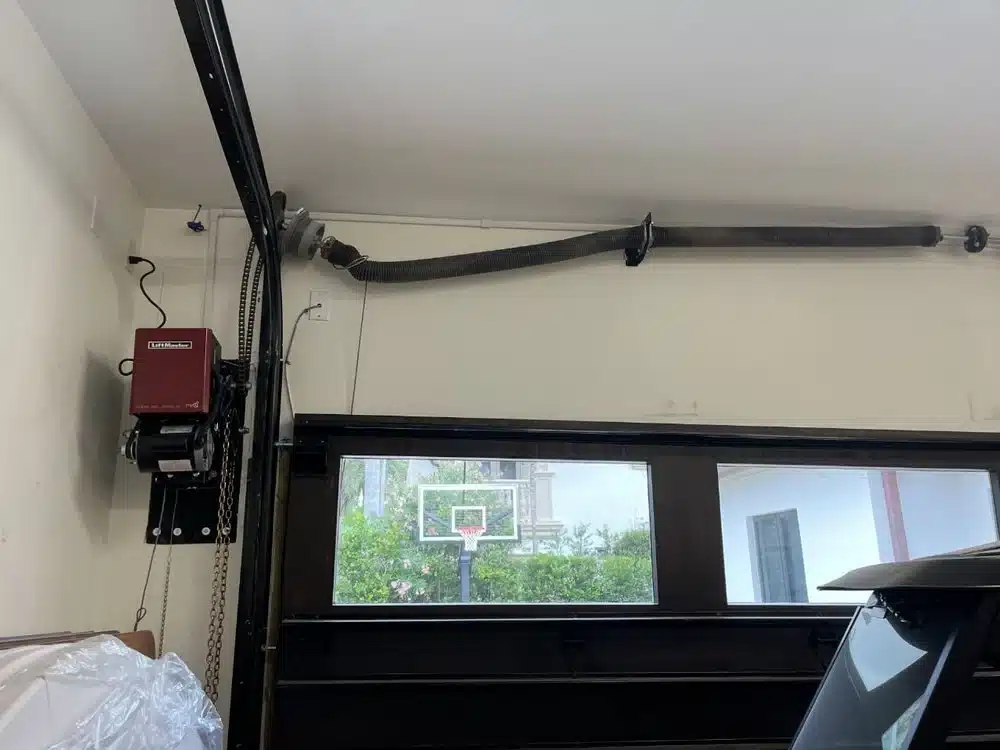
This is the strongest argument for a wall-mount (jackshaft) opener near the ocean. It bolts beside the door and drives the torsion bar directly, so there is no ceiling rail, no chain, and no trolley to corrode. It also sits high on the wall, above the water line of a typical flooding event.
The LiftMaster 98032 and its lighter-duty sibling the 98022 are both wall-mount units, as is the 8500W.
2. Battery backup
This matters more in South Florida than any corrosion spec. When a hurricane takes the power out, a heavy impact-rated door with no backup battery has to be operated manually. The 98032, 98022, and 8500W all include battery backup, and so does the belt-drive 87504-267 if a ceiling-mounted opener is your only option.
3. A belt instead of a chain, if you must go ceiling-mounted
Not every garage can take a wall-mount opener; it requires a torsion bar setup with adequate side room. Where a ceiling unit is the only choice, a reinforced belt drive such as the 87504-267 avoids the long steel chain and runs quieter. Chain-rail units like the 8587W are built for the heaviest doors, and they are a reasonable choice too — the chain simply becomes one more steel part to keep lubricated.
4. The hardware package, which matters more than the opener brand
An opener is only as reliable as the door it moves. Near the water we specify corrosion-resistant springs, quality cables, and sealed or nylon rollers with stainless or galvanized fasteners. This is the single highest-value upgrade for a coastal home, and it is usually a small part of the total cost.
5. Service access and a maintenance plan
Coastal equipment is maintained, not installed and forgotten. Openers near the ocean need attention on a schedule, which is why we put waterfront customers on a service plan rather than waiting for a failure.
So, is the LiftMaster 98032 a good opener for an oceanside home?
In our experience, yes, and it is one of the units we install most often east of the Intracoastal. Just be clear about why, because the reasons are design and capacity, not a certificate:
| What’s documented | What isn’t |
|---|---|
| UL 325 certified; lifts doors 400–1,100 lbs | No coastal, marine, or salt-spray rating |
| Wall-mount jackshaft design; no rail or chain | No published humidity or corrosion specification |
| Battery backup included; Wi-Fi and myQ control | Manual specifies indoor mounting only |
| Lifetime motor warranty, 5-year parts warranty | A warranty on defects is not a corrosion warranty |
The 1,100 lb capacity is quietly important on the coast. Impact-rated hurricane doors are heavy, and an opener working near its limit wears out faster. A heavy-duty unit on a heavy door is doing less work per cycle.
A realistic coastal maintenance schedule
This is what keeps an opener alive within a mile of the ocean, and it is more or less what the manual asks for, tightened up for salt air:
- Monthly: run the safety reversal test, and pull the emergency release with the door closed to confirm it still moves by hand.
- Every 3 months: rinse the door and exposed hardware with fresh water, then dry it. Wipe down photo-eye lenses and check for corrosion at the brackets.
- Every 6 months: lubricate rollers, bearings, and hinges. The opener motor itself does not need additional lubrication.
- Annually: a professional inspection of springs, cables, drums, and electrical connections. This is the visit that catches a pitted cable before it snaps.
Frequently asked questions
Is there any documentation that the LiftMaster 98032 is suitable for oceanside environments?
No. LiftMaster’s published specifications, the product page, and the installation manual make no claims about coastal use, salt exposure, or corrosion resistance. The documentation covers UL 325 safety certification, door weight capacity, and standard indoor installation. No residential opener on the market carries a coastal rating.
Do garage door openers rust near the ocean?
The motor housing is not usually the problem. The steel around it is: springs, cables, chains, rails, brackets, and fasteners corrode first, and salty humidity degrades electrical contacts and sensors over time.
How long should an opener last on the water?
An opener that would run 15 years inland will often need attention much sooner near the coast, and the variation is enormous depending on maintenance, how exposed the garage is, and whether the door is opened and closed often. Consistent rinsing and annual service make a bigger difference than the brand on the motor.
Does the warranty cover salt corrosion?
Manufacturer warranties cover defects in materials and workmanship. Corrosion from environmental exposure is generally not the same thing, so read the specific warranty terms before assuming you are covered. Ask us and we will walk you through what applies to the unit you are considering.
Is a wall-mount opener always better for a coastal home?
It is usually the better choice when the garage can take one, because it removes the rail and chain and sits high on the wall. It does require a torsion bar and enough clearance beside the door, which is what we check during an estimate.
Talk it through with someone who works on the water
We install and service openers from Miami through Fort Lauderdale to Naples, much of it within a few miles of salt water, so we see how these units age in this specific climate. If you want a recommendation for your door and your garage, browse our LiftMaster opener lineup or get in touch and we will give you a straight answer, certificate or no certificate.