Summary:
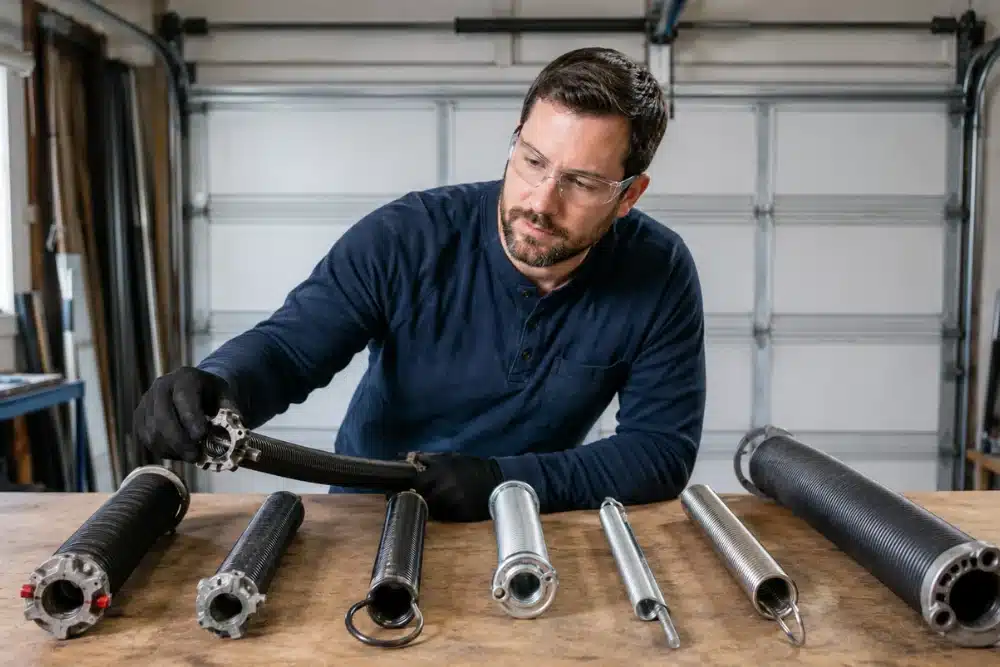
Why Spring Type Actually Matters
Garage door springs carry the full weight of the door, using tension to make lifting and lowering smooth instead of a two-person struggle. The wrong spring for your door’s size and weight can lead to premature wear, uneven movement, or a door that slams down faster than it should. Matching spring type to your specific door setup matters just as much as picking a style you like.
Springs also wear out over time, typically lasting 7 to 12 years depending on usage, so understanding your options now saves you a headache later.
1. Standard Torsion Springs
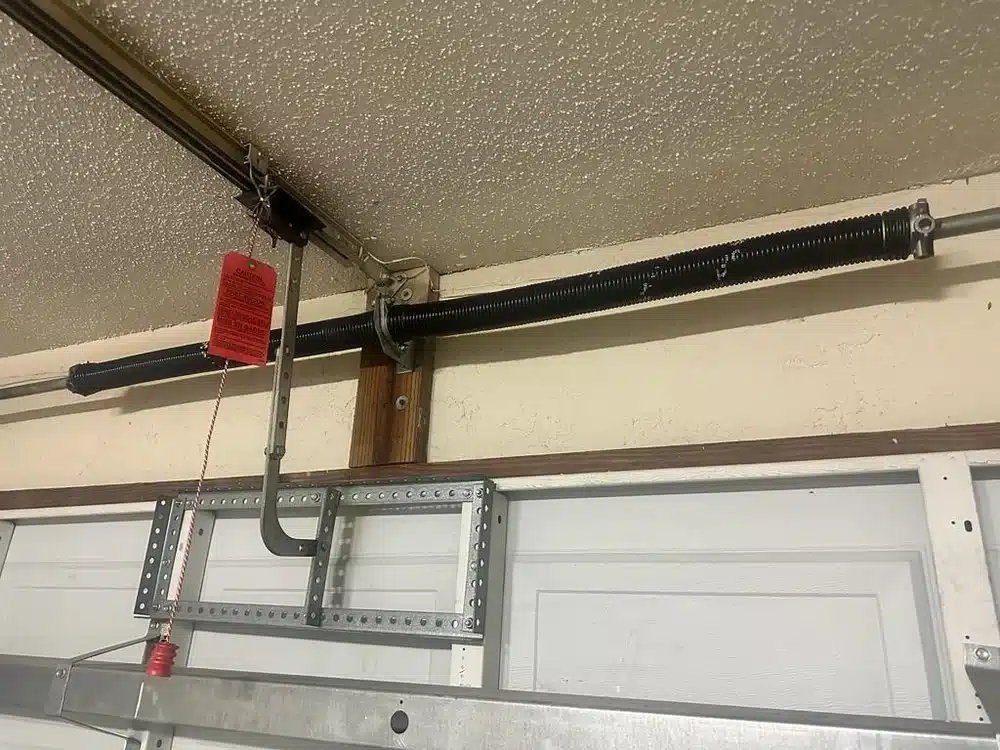
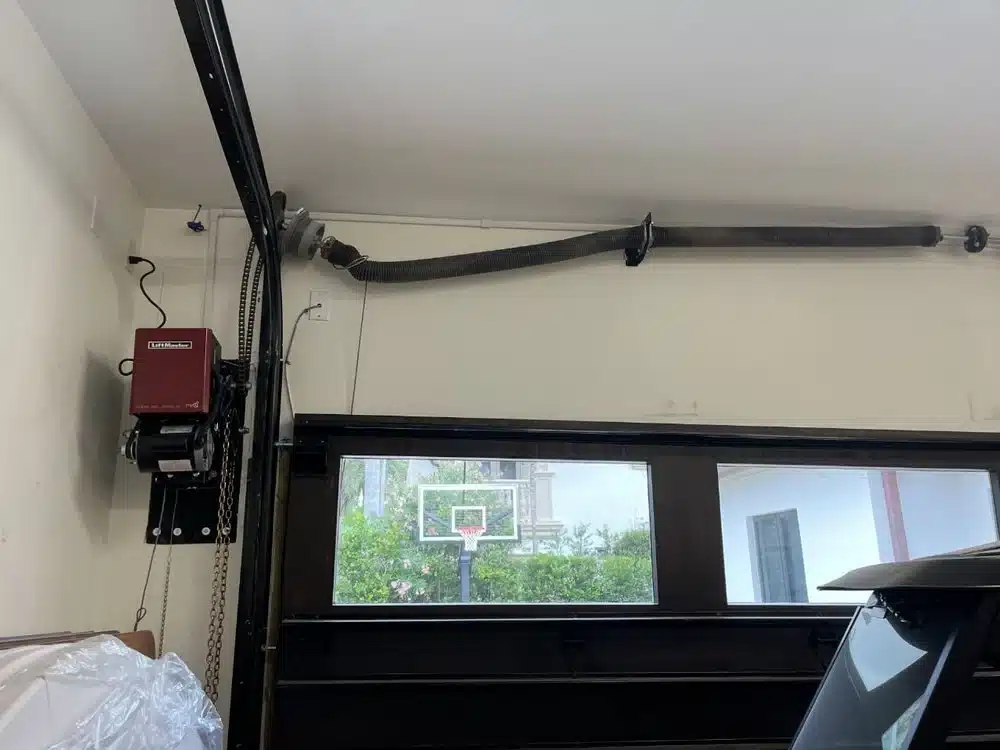
This is the most common type found on residential garage doors today. Torsion springs sit horizontally above the door opening on a metal shaft and twist to create the lifting force needed to raise the door. Because the tension is carried by a shaft rather than stretched along the tracks, torsion springs tend to offer smoother movement and a longer lifespan than some other options.
- Mounted above the door on a horizontal shaft
- Handles heavier doors well
- Generally lasts longer than extension springs
- Requires professional installation due to high tension
2. Double Torsion Springs
For heavier doors, including many insulated or custom wood designs, a single torsion spring may not provide enough lifting power on its own. Double torsion springs use two springs working together on the same shaft, splitting the load and reducing strain on each one. This setup also adds backup support, since if one spring weakens, the door does not immediately lose all lifting force.
3. EZ-Set Torsion Springs
EZ-Set torsion springs function similarly to standard torsion springs but feature a winding cone that makes adjustments and installation somewhat more manageable for technicians. They still carry the same high tension as any torsion spring, so professional handling remains essential, but the design offers more flexibility during setup and future maintenance.
4. Torquemaster Springs
Torquemaster springs, most commonly associated with Wayne Dalton doors, are enclosed inside a metal tube rather than exposed above the door. This design adds a layer of safety because the spring is neither visible nor accessible during normal operation. The tradeoff is that Torquemaster systems can be trickier to service, and replacement often requires parts matched to the original setup.
5. Extension Springs, Open-Looped
Extension springs run along the horizontal tracks on either side of the door instead of above it. Open-looped extension springs are a budget-friendly option, commonly found on older or lighter garage doors. They stretch and contract as the door moves, providing the lifting assistance needed for smooth operation.
6. Extension Springs, Double-Looped
Double-looped extension springs work the same way as open-looped versions but feature reinforced coil ends for added durability. This makes them a step up in longevity and resistance to wear, which is especially useful in Florida’s humid climate, where corrosion can shorten the lifespan of lower-grade hardware.
7. Steel Rolling Door Springs
Commonly used on commercial roll-up doors rather than standard residential garages, steel rolling door springs are built to handle the unique mechanics of coiling doors. These springs are engineered for heavier-duty applications, including warehouses, storage units, and commercial storefronts, and typically require specialized knowledge to install and adjust correctly.
How To Choose the Right Spring for Your Door
Now that you know the main types, here is how to narrow things down for your door.
- Consider your door’s weight and material, since heavier insulated or wood doors often need torsion or double torsion springs
- Think about your budget, keeping in mind extension springs are typically less expensive upfront but may need replacement sooner
- Factor in your climate, since coastal humidity can wear down lower-quality springs faster
- Prioritize safety, since garage door springs operate under intense tension and improper handling can cause serious injury
If you are unsure which spring matches your current setup, a quick inspection by a professional can save you from guessing and potentially further damaging your door.
When To Call a Professional
Spring replacement is one repair genuinely not worth doing yourself. The tension involved can cause serious injury if the spring releases unexpectedly, and an incorrect size or type can shorten the lifespan of your entire door system. Our garage door spring repair service covers inspection, replacement, and adjustment for all the spring types listed above, so you get the correct match the first time.
Ready for a Smoother, Safer Garage Door?
Understanding the types of garage door springs and how to choose the right one for your home does not have to be complicated once you know what each option offers. Whether your current spring is worn out or you are simply planning ahead, getting the right match keeps your garage door running safely and smoothly for years to come.
Joe’s Doors has been helping South Florida homeowners with spring repairs and replacements for years, and our technicians know exactly which spring type fits your door and household needs. Reach out to our team today for a professional inspection, and let us help you get your garage door back to working the way it should.
Not sure which spring your garage door needs? Contact Joe’s Doors today to schedule a professional inspection and get your door running safely again.
Frequently Asked Questions
How do I know if my garage door spring is broken?
Common signs include a loud bang from the garage, the door feeling unusually heavy, or the door hanging unevenly when partially open. Any of these signals that it is time for a professional inspection.
Can I replace a garage door spring myself?
It is strongly discouraged. Garage door springs hold significant tension, and improper handling can lead to serious injury. Professional replacement is the safer choice.
How long do garage door springs typically last?
Most springs last 7 to 12 years, or roughly 10,000 open-and-close cycles, though usage frequency and climate can affect that lifespan.
What is the difference between torsion and extension springs?
Torsion springs sit above the door and twist to create lifting force, while extension springs run along the side tracks and stretch to assist movement. Torsion springs generally offer smoother operation and a longer lifespan.
How much does it cost to replace a garage door spring?
Cost varies based on spring type, door size, and whether one or two springs need replacing, so it is best to request a quote based on your door.
Commercial doors use heavier torsion and barrel springs and higher cycle ratings; if a spring on a warehouse, shop or storefront door has let go, see commercial garage door repair for same-day service. And if the door around the spring is past saving, our garage door replacement page explains the options and installed prices.