Summary:
If you’ve never really looked at your garage door springs, you’re not alone. Most homeowners don’t think about them until the door stops working. But knowing the torsion spring vs extension spring difference can help you understand what went wrong, what a repair may involve, and why the cost can vary.
The good news is that you don’t need to become a garage door expert. A quick look at where your springs are installed can usually tell you which type you have.
What Is a Torsion Spring?
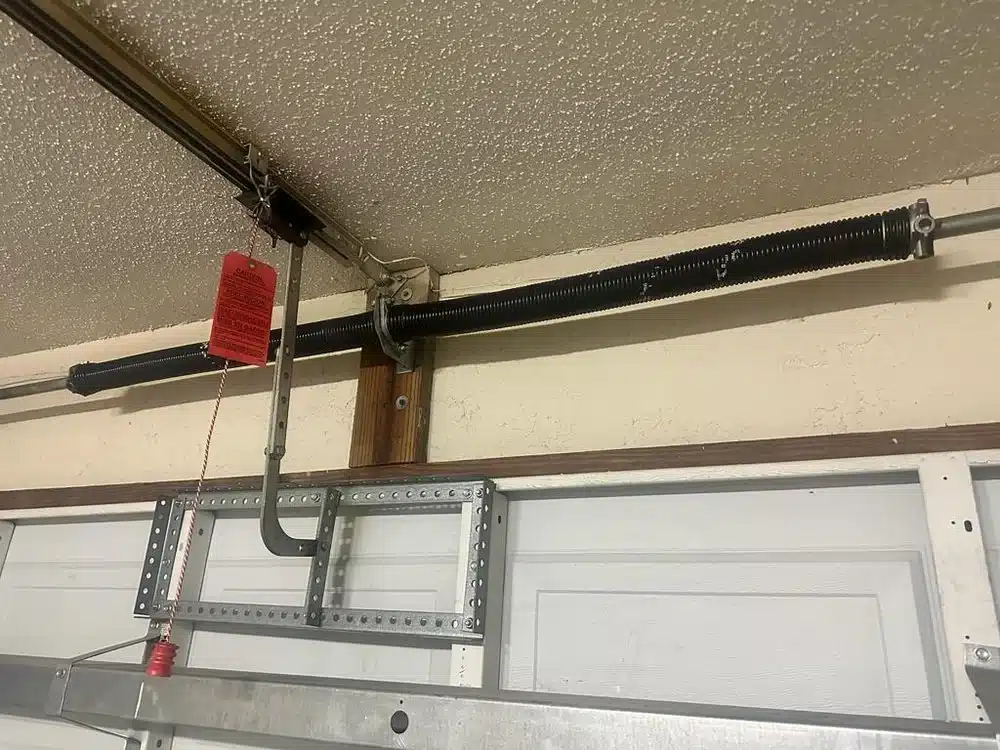
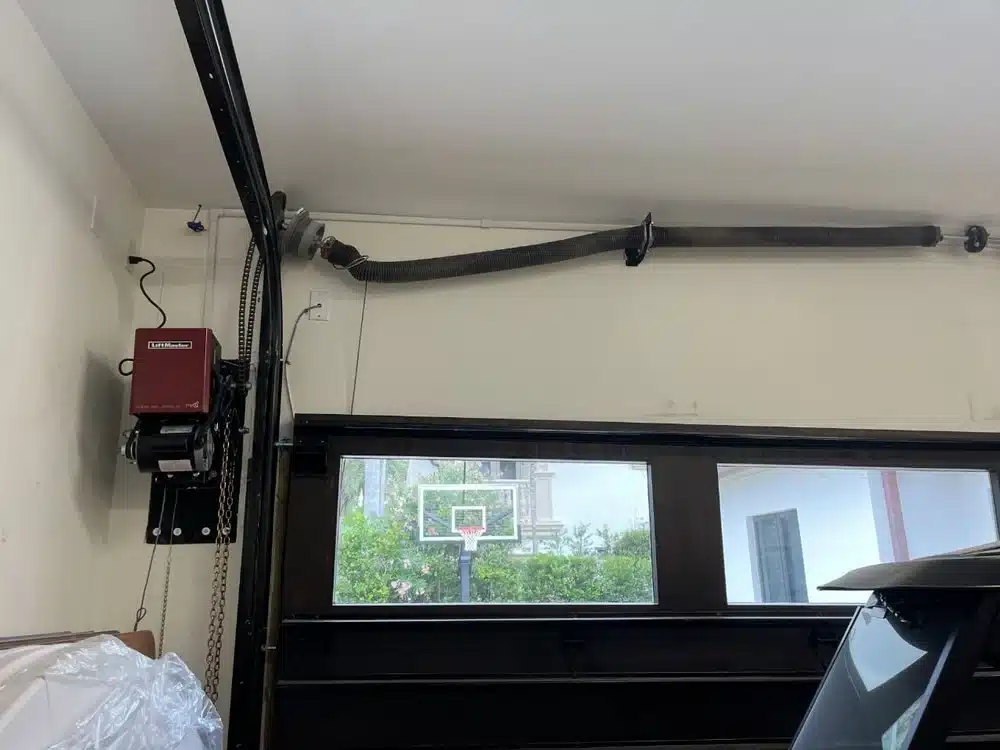
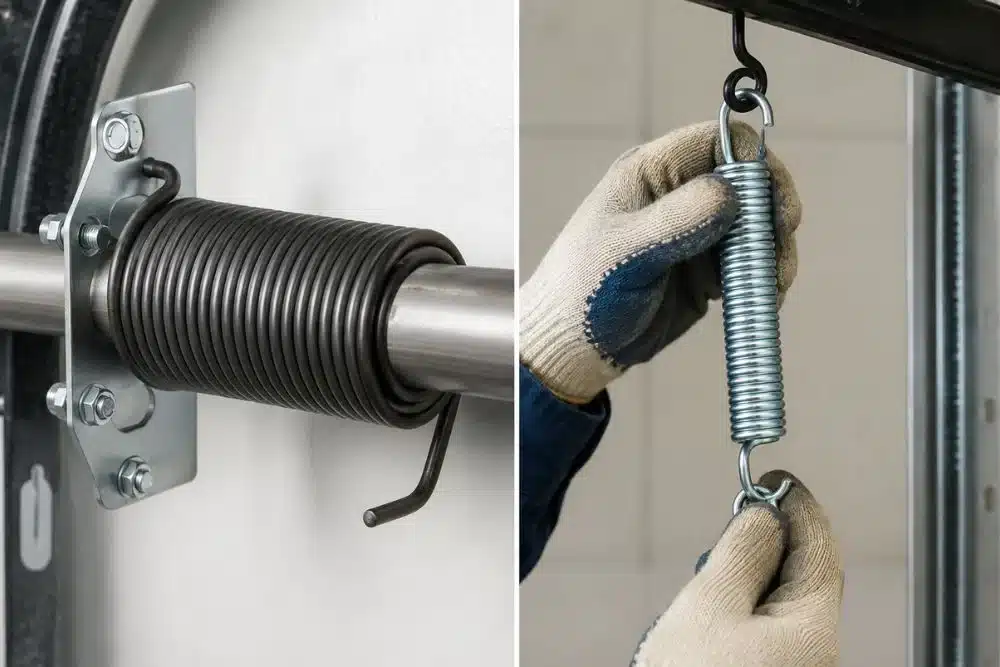
A torsion spring sits above the garage door, usually mounted on a metal shaft. When the door opens and closes, the spring twists and releases energy to help lift the door.
If you have a torsion spring garage door, you’ll usually see a thick coil sitting horizontally above the top section of the door.
Torsion springs are common on residential garage doors because they provide smooth, controlled movement. They’re also available in different sizes and strengths to match the weight of the door.
What Is an Extension Spring?
Extension springs work differently. Instead of sitting above the door, they’re installed along the horizontal tracks on either side of the garage door.
When the door opens, the springs stretch. When it closes, they contract and help control the movement of the door.
If you have an extension spring garage door, you’ll generally see a long coil running beside the track.
Torsion Spring vs Extension Spring Difference: What Changes?
Both systems help lift your garage door, but there are some important differences.
Location: Torsion springs sit above the door. Extension springs sit alongside the horizontal tracks.
How they work: Torsion springs twist. Extension springs stretch.
Lifespan: Both can last for years, but actual lifespan depends on the spring’s cycle rating, how often you use the door, the door’s weight, and general conditions.
Cost: Extension springs are often less expensive to replace. Torsion spring repairs can cost more because of the parts and installation involved.
Performance: Torsion systems generally provide smoother and more controlled movement, particularly on heavier doors.
Safety: Both systems can be dangerous when broken or handled incorrectly.
Understanding the torsion spring vs extension spring difference can also help you know what to expect when a spring breaks. The repair process and replacement parts can vary depending on the system your door uses.
How Can You Tell Which Spring You Have?
You can usually identify your spring without touching anything. Stand a safe distance from the garage door and look above and beside it.
- Coil sitting above the door? You likely have a torsion spring.
- Long coil running beside the horizontal track? You likely have an extension spring.
- Not sure? Don’t pull on anything or try to test the spring yourself.
This simple garage door spring identification can help when you’re calling for service, but a technician should confirm the spring type before replacing it. If you’re unsure, Joe’s Doors can help you identify it.
Which Spring Type Is Better for South Florida?
There’s no universal winner for South Florida homes. Torsion systems can be a strong choice because they offer controlled operation and work well with heavier doors.
South Florida garage doors deal with heat, humidity, storms, and, in coastal areas, salty air. Some properties also have specific wind-load requirements.
That doesn’t mean you should replace a working extension system simply because you live in South Florida. If it’s properly installed and maintained, there’s usually no reason to change it.
When Should You Replace Your Garage Door Springs?
Springs don’t last forever. A door that suddenly feels heavy, doesn’t open smoothly, sits unevenly, or makes unusual sounds may have a worn spring.
Springs are often rated by cycles, meaning one complete opening and closing of the door. A higher cycle rating generally means a longer expected lifespan, although actual life varies.
If a spring breaks, don’t keep forcing the door open and closed. It can put extra strain on other components.
Can You Switch From Extension to Torsion Springs?
Sometimes, yes. But it’s not a simple spring swap. A conversion can involve different hardware, brackets, shafts, cables, and other components.
For some homeowners, a torsion conversion makes sense. For others, replacing the existing spring system is the better option. We recommend having the door assessed before deciding.
Frequently Asked Questions
Which spring type is better?
For many residential doors, torsion springs offer smooth, controlled operation. But the best choice depends on the door’s design, weight, and existing hardware.
Are torsion springs safer than extension springs?
Neither is a DIY repair. Both store significant energy and can cause serious injury if installed or adjusted incorrectly.
Can I identify my spring myself?
Usually. Look above the door for a torsion spring or beside the horizontal tracks for extension springs. Don’t touch or adjust them.
How long do garage door springs last?
Lifespan depends on cycle rating, door weight, usage, and environmental conditions.
Not Sure Which Spring You Have?
You don’t have to figure it out alone. Knowing the torsion spring vs extension spring difference is useful, but choosing the right replacement and installing it safely is a job best left to a professional.
Joe’s Doors can inspect your system and explain your options.
Call (954) 799-9787 to identify your spring type and understand the torsion spring vs extension spring difference.